











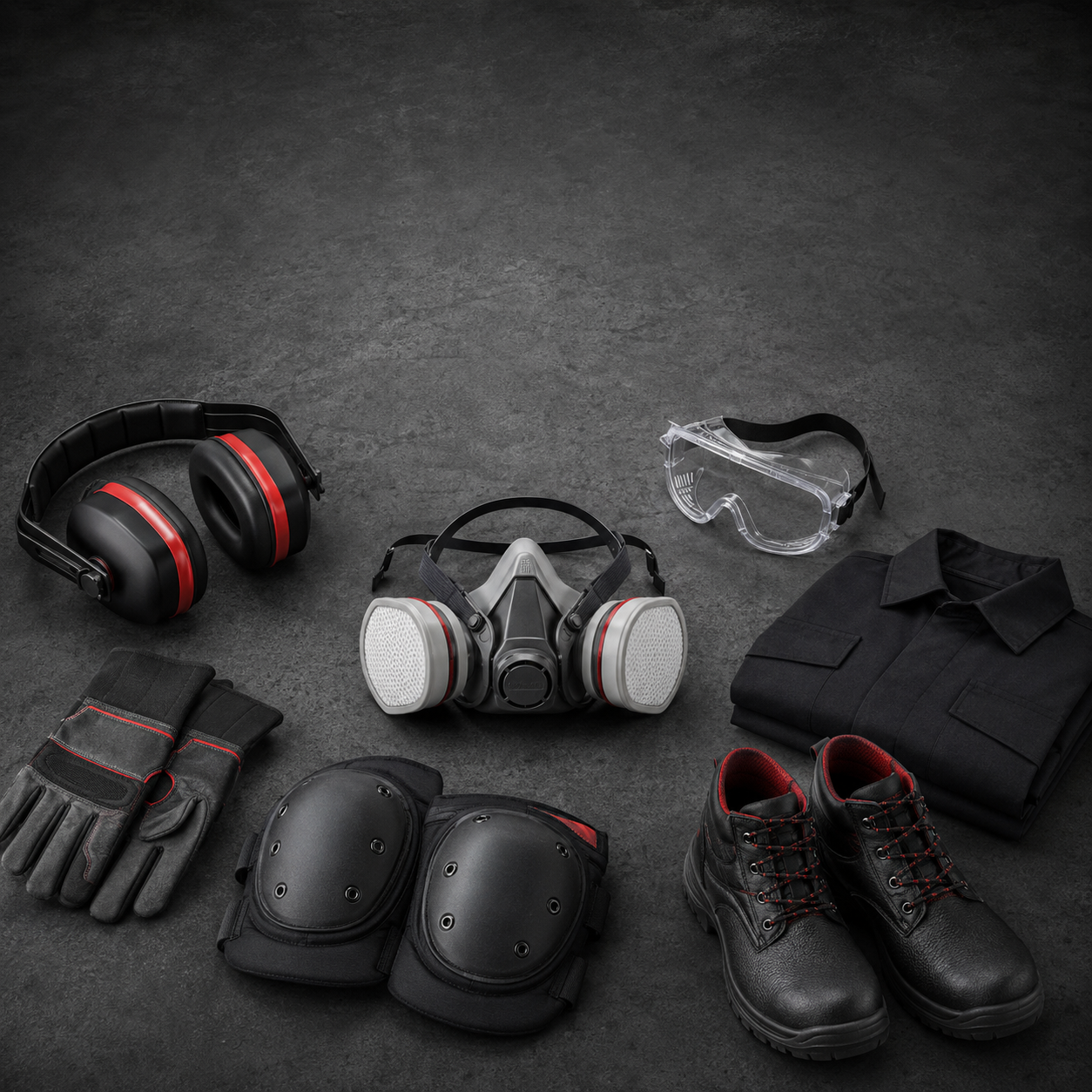
The Importance of PPE When Grinding, Cutting and Preparing Concrete
Concrete grinding, cutting and floor preparation involve hazards that are easy to underestimate.
A worker may be exposed to respirable crystalline silica, flying fragments, high noise levels, moving machinery, electrical equipment, chemicals and heavy tools—all during the same project.
Personal protective equipment, commonly known as PPE, can reduce the risk of injury and exposure. However, PPE should never be the only safety measure used.
The correct approach combines:
- Risk assessment
- Proper training
- Suitable machinery and tooling
- On-tool dust extraction or water suppression
- Work-area isolation
- Safe operating procedures
- Correctly selected PPE
- Equipment inspection and maintenance
This guide explains the importance of PPE when grinding, cutting and preparing concrete, what each item protects against and why dust control must begin at the machine.
PPE Is the Last Line of Defence
PPE is essential, but it sits near the bottom of the hierarchy of controls.
A respirator does not stop silica dust from being generated. Safety glasses do not prevent fragments from leaving a grinding wheel. Hearing protection does not reduce the noise produced by a machine.
PPE protects the person after other controls have been applied.
Safe Work Australia warns that relying only on PPE to manage respirable crystalline silica is rarely appropriate because PPE does not prevent dust from being generated. PPE is most effective when it manages the residual risk remaining after higher-level controls have been implemented. Safe Work Australia: Managing risks of respirable crystalline silica
For concrete grinding, higher-level controls may include:
- A grinder with an effective dust shroud
- A correctly sized H-class dust extractor
- Suitable hose connections
- Water suppression where appropriate
- Isolation of the work area
- Limiting access to the grinding zone
- Mechanical lifting aids
- Adequate ventilation
- Correct grinder maintenance
- Suitable work methods
PPE then provides another layer of protection.
The Main Hazards in Concrete Floor Preparation
Concrete grinding and cutting can expose workers to several hazards at once.
Respirable Crystalline Silica
Concrete contains crystalline silica. Grinding, cutting, drilling, polishing and other mechanical processes can release extremely fine respirable crystalline silica particles.
These particles can travel deep into the lungs and may cause irreversible lung damage. Silica exposure is associated with serious diseases, including silicosis and lung cancer. Safe Work Australia: Crystalline silica
Silica dust can remain airborne even when the larger, visible dust has settled. A work area that does not look dusty is not automatically safe.
Flying Particles
Concrete fragments, aggregate, metal, coating debris and damaged tooling can be thrown from grinding or cutting equipment.
These materials can injure:
- Eyes
- Face
- Hands
- Legs
- Nearby workers
Noise
Floor grinders, hand grinders, dust extractors, scarifiers, saws and air scrubbers can generate substantial noise.
Repeated or prolonged exposure may cause permanent hearing loss. Noise damage is often gradual and may not be obvious until it is irreversible.
Moving Machinery
Rotating grinder heads, cup wheels, belts and other moving components can catch:
- Loose clothing
- Jewellery
- Hair
- Electrical leads
- Dust hoses
- Gloves
Machines can also move unexpectedly if the tooling catches an edge, joint, coating or surface defect.
Electrical Hazards
Concrete-grinding projects frequently involve:
- High-powered machinery
- Multiple electrical circuits
- Extension leads
- Wet concrete
- Water suppression
- Damaged plugs
- Dust entering electrical components
Incorrect electrical setups can result in electric shock, fire, damaged equipment or repeated circuit tripping.
Chemicals
Flooring contractors may work with:
- Epoxy resin
- Polyurethane
- Polyaspartic coatings
- Primers
- Solvents
- Degreasers
- Concrete densifiers
- Repair compounds
- Cleaning products
These materials can create skin, eye, inhalation and fire hazards. The correct PPE must be selected using the product’s current safety data sheet.
Manual Handling
Floor grinders, dust extractors and tooling can be heavy.
Injuries can occur while:
- Loading equipment
- Unloading equipment
- Moving machines up stairs
- Changing grinder weights
- Tilting grinders
- Emptying dust bags
- Carrying coating kits
PPE cannot correct an unsafe lift. Use mechanical assistance and correct handling methods whenever possible.
Respiratory Protective Equipment
Respiratory protective equipment, or RPE, may be required when other controls cannot adequately control inhalation exposure.
The correct respirator depends on:
- Material being processed
- Dust or chemical hazard
- Engineering controls in use
- Exposure concentration
- Task duration
- Work environment
- Applicable workplace requirements
- Respirator protection factor
- Individual wearer
A basic nuisance-dust mask should not be assumed to provide suitable protection for concrete grinding.
Respirator Fit Matters
A respirator cannot provide its intended protection if contaminated air can leak around the seal.
Workers using tight-fitting respirators should:
- Be fit-tested for the specific make, model and size
- Complete a seal check every time the respirator is fitted
- Follow the manufacturer’s instructions
- Be clean-shaven where the respirator seals against the face
- Keep the respirator clean
- Replace damaged components
- Use suitable filters or cartridges
- Store the respirator away from dust and chemicals
Facial hair, incorrect strap tension, damaged seals and the wrong respirator size can all reduce protection.
Fit-testing one model does not confirm that every respirator will fit the same worker.
Dust Filters and Chemical Cartridges Are Not the Same
A particulate filter designed for concrete dust does not automatically protect against solvent vapours.
When applying coatings, primers or solvents, the required respiratory protection may be completely different from the equipment used during grinding.
Check the product safety data sheet and exposure assessment to determine whether protection is required against:
- Particulates
- Organic vapours
- Acid gases
- Combination hazards
- Isocyanates
- Other hazardous substances
Never select a chemical cartridge based only on its colour or appearance.
Some coating applications may require supplied-air respiratory protection rather than a standard reusable half-face respirator. This must be determined from the product, task and exposure conditions.
Safety Glasses and Face Protection
Eye protection should be worn when grinding, cutting, drilling, mixing coatings or handling chemicals.
Safety glasses can protect against many particles, but sealed goggles may be more suitable where fine dust, splashes or chemical exposure could enter around the sides.
A face shield may be required for tasks involving a greater risk of flying fragments or chemical splashes.
A face shield does not normally replace safety glasses or goggles. It provides additional protection for the face.
Inspect eye protection for:
- Cracks
- Scratches
- Damaged side shields
- Loose arms
- Poor fit
- Reduced visibility
- Chemical contamination
Heavily scratched lenses can reduce visibility and create another hazard around moving machinery.
Hearing Protection
Concrete floor-preparation equipment can expose workers to damaging noise levels.
Suitable hearing protection may include:
- Earplugs
- Earmuffs
- Helmet-mounted earmuffs
- Dual protection where assessment shows it is necessary
The correct selection depends on measured or assessed noise exposure.
More protection is not always automatically better. Excessive attenuation can make it difficult to hear alarms, instructions and approaching machinery.
Hearing protection must fit properly and remain in place during the noisy task. Removing earmuffs for short conversations while the grinder continues operating still increases exposure.
Noise should also be controlled at the source through:
- Machine maintenance
- Correct tooling
- Equipment selection
- Isolation
- Barriers
- Reduced exposure time
Gloves
Gloves can protect against:
- Sharp coating fragments
- Abrasive concrete
- Minor cuts
- Dirt and contamination
- Certain chemicals
- Heat from recently operated tooling
However, one glove type is not suitable for every task.
Chemical-resistant gloves should be selected using the safety data sheet for the product being handled. A glove that resists one solvent may break down rapidly when exposed to another.
Gloves must also be used carefully near rotating equipment. Loose or damaged gloves can become caught in moving parts.
Before changing diamond tools:
- Stop the machine.
- Isolate it from its energy source.
- Allow hot tooling to cool.
- Confirm that all moving components have stopped.
- Use gloves appropriate for handling the tooling.
Never reach beneath a grinder that can accidentally start or move.
Safety Footwear
Suitable safety footwear can protect against:
- Dropped tools
- Heavy grinding shoes
- Machinery wheels
- Sharp debris
- Slippery surfaces
- Chemical splashes
- Uneven concrete
Steel-cap or suitable safety-toe boots with slip-resistant soles are generally appropriate for concrete floor preparation.
Footwear should be:
- Correctly fitted
- Properly laced
- In good condition
- Suitable for the work surface
- Compatible with chemical exposure
- Free from excessive coating build-up
Ordinary running shoes do not provide the same level of impact, puncture or chemical protection.
Protective Clothing
Work clothing should protect the skin without creating an entanglement hazard.
Suitable clothing may include:
- Long trousers
- Long sleeves
- Disposable coveralls
- High-visibility clothing
- Chemical-resistant coveralls
- Knee protection
Clothing should fit closely enough that it cannot become caught in rotating equipment.
Do not wear:
- Loose drawstrings
- Hanging jewellery
- Unsecured hood cords
- Loose sleeves
- Clothing with large tears
Dust-covered clothing should not be shaken out or cleaned using compressed air. This can release silica dust back into the breathing zone.
If clothing is regularly becoming heavily covered in concrete dust, the dust-control system should be reviewed rather than treating contamination as normal.
Knee Protection
Floor-preparation work often requires kneeling while:
- Grinding edges
- Repairing cracks
- Filling joints
- Masking areas
- Applying coatings
- Inspecting the surface
- Changing tooling
Repeated kneeling on hard concrete can cause pain and long-term joint problems.
Suitable knee pads or kneeling mats can reduce pressure and improve comfort. They should fit securely without restricting circulation or creating a trip hazard.
Head Protection
Head protection may be required where there is a risk from:
- Falling objects
- Overhead work
- Low structures
- Construction activity
- Moving plant
- Worksite rules
A hard hat is not necessary for every garage-floor project, but it may be mandatory on active construction sites.
The site risk assessment and applicable worksite requirements should determine whether head protection is needed.
High-Visibility Clothing
High-visibility clothing may be necessary where workers operate near:
- Vehicles
- Forklifts
- Excavators
- Delivery trucks
- Other mobile plant
- Active construction traffic
A worker focused on operating a grinder may not see a vehicle approaching from behind.
High-visibility clothing should be kept clean enough to remain effective and must not be loose around moving equipment.
PPE for Mixing and Applying Floor Coatings
Concrete preparation may be followed by the application of epoxy, polyurethane, polyaspartic or another resin system.
The PPE used for grinding may not be suitable for coating application.
Depending on the product, required PPE may include:
- Chemical-resistant gloves
- Safety goggles
- Face shield
- Protective clothing
- Chemical-resistant footwear
- Suitable respiratory protection
- Disposable coveralls
Read the current safety data sheet before opening or mixing the product.
Pay particular attention to:
- Skin sensitisation
- Eye-damage warnings
- Vapour hazards
- Ventilation requirements
- Isocyanates
- Flammability
- Spill procedures
- First-aid instructions
- Filter or cartridge requirements
Epoxy and polyurethane components can cause sensitisation. Once sensitised, a person may react to smaller future exposures.
Avoid direct skin contact even if the installer has used the same product previously without an obvious reaction.
The Importance of H-Class Dust Extraction
When dry grinding concrete, the grinder should be connected to an appropriately sized H-class dust extractor as part of a complete dust-control system.
Diamond Tool Warehouse recommends using an H-class dust extractor every time concrete is dry ground.
The extractor should:
- Provide sufficient airflow for the grinder
- Have suitable H-class filtration
- Connect securely to the grinder shroud
- Include an effective filter-cleaning system
- Use correctly sized hoses
- Collect dust without uncontrolled release
- Be maintained according to its instructions
Queensland’s silica code states that dust extractors for power tools should be H-class where reasonably practicable because they are more effective at capturing dangerous dust such as respirable crystalline silica. WorkSafe Queensland: Silica Code of Practice
A domestic vacuum is not suitable simply because its hose can be connected to a grinder.
Dust Shrouds and Hose Connections
A high-quality dust extractor cannot capture dust that never reaches the hose.
Check that:
- The grinder shroud is fitted correctly
- The shroud skirt contacts the floor
- There are no unnecessary gaps
- The hose is not split or crushed
- Hose adapters fit securely
- The hose diameter suits the machine
- Filters are clean and functional
- The dust bag is installed properly
- Airflow remains adequate during operation
A missing shroud section near a wall can release large amounts of dust. Use correctly designed edge-grinding equipment rather than removing the shroud and grinding without extraction.
Air Scrubbers Provide Additional Protection
An air scrubber can help filter airborne particles that escape the grinder’s on-tool extraction system.
It is especially useful in:
- Enclosed rooms
- Occupied buildings
- Areas with limited natural ventilation
- Projects involving extensive edge grinding
- Work areas close to other trades
- Dust-sensitive environments
An air scrubber does not replace the H-class extractor connected to the grinder.
The extractor captures dust at the source. The air scrubber filters particles that escape into the room. They perform different jobs and may be required together.
Wet Grinding Still Requires Controls
Water suppression can reduce airborne dust by controlling it at the source, but wet grinding does not eliminate every risk.
Wet work introduces hazards including:
- Slippery floors
- Electrical risks
- Contaminated slurry
- Splashing
- Difficult waste handling
- Silica-containing mist
- Reduced visibility
Slurry must be contained and removed before it dries. Once dry, the remaining material can become airborne again.
Do not allow wet grinding waste to enter stormwater drains.
Cleaning the Work Area
Incorrect cleaning can reintroduce silica dust after the grinding is complete.
Avoid:
- Dry sweeping
- Using leaf blowers
- Blowing dust with compressed air
- Shaking dusty clothing
- Emptying unsealed dust directly into open bins
Use:
- An H-class vacuum
- Controlled wet-cleaning methods where appropriate
- Sealed dust bags
- Suitable waste containers
- Careful removal of contaminated PPE
WorkSafe Queensland recommends using an M- or H-class vacuum for silica-containing debris and warns against dry sweeping and compressed-air cleaning. WorkSafe Queensland: Construction silica dust
Inspect PPE Before Every Job
PPE should be checked before it is used.
Inspect:
Respirators
- Face seal
- Straps
- Valves
- Filter condition
- Cartridge expiry
- Correct assembly
- Cleanliness
Eye Protection
- Scratches
- Cracks
- Secure fit
- Side protection
- Chemical damage
Hearing Protection
- Damaged cushions
- Dirty plugs
- Cracked headbands
- Poor fit
Gloves
- Tears
- Pinholes
- Chemical damage
- Contamination
- Loss of grip
Safety Boots
- Damaged soles
- Exposed toe caps
- Worn tread
- Split uppers
- Chemical contamination
Damaged PPE should be replaced before work begins.
PPE Must Fit the Individual
PPE is not truly protective if it is uncomfortable, incorrectly sized or incompatible with other equipment.
Common compatibility problems include:
- Safety glasses breaking a respirator seal
- Earmuffs interfering with eye protection
- A hard hat preventing earmuffs from sealing
- Gloves that are too large to control machinery safely
- Knee pads slipping down
- Coveralls restricting movement
- Respirator straps conflicting with head protection
Workers should be provided with PPE that fits them—not simply whatever size is available in the vehicle.
Training Is Part of PPE
Handing a worker a respirator or pair of earmuffs is not enough.
Workers should understand:
- Why the PPE is required
- What hazard it controls
- Its limitations
- How to fit it correctly
- How to inspect it
- When to replace it
- How to clean it
- How to store it
- What to do if it becomes damaged
- When to stop work
Workers must also know how to recognise failing controls.
Examples include:
- Visible dust escaping from the shroud
- Reduced vacuum airflow
- Damaged hoses
- Full dust bags
- Blocked filters
- Unusual machine vibration
- Excessive noise
- Chemical odours inside a respirator
- Fogging eye protection
- Coating contacting the skin
Stopping to correct a control failure is not lost productivity. Continuing can turn a manageable problem into an injury or exposure.
A Practical PPE Checklist for Concrete Grinding
The exact PPE must come from the risk assessment, but a concrete-grinding setup may include:
- Correctly selected and fit-tested respiratory protection where required
- Safety glasses or sealed goggles
- Hearing protection
- Suitable work gloves
- Steel-cap safety boots
- Long work trousers
- Close-fitting work clothing
- Knee protection
- High-visibility clothing where vehicles or mobile plant operate
- Hard hat where overhead or site hazards require it
This must be supported by:
- Grinder dust shroud
- Properly sized H-class dust extractor
- Secure dust hose
- Air scrubber where required
- Controlled work area
- Suitable electrical supply
- Safe dust disposal
- Worker training
Common PPE Mistakes
Avoid these common errors:
- Wearing a nuisance mask for a high-exposure task
- Using a tight-fitting respirator over facial hair
- Failing to fit-test respirators
- Reusing contaminated disposable PPE
- Using particulate filters for solvent vapours
- Removing hearing protection while machinery operates
- Wearing loose gloves near rotating equipment
- Grinding without eye protection
- Wearing ordinary shoes around heavy machinery
- Leaving dusty respirators uncovered in the work vehicle
- Cleaning clothing with compressed air
- Assuming PPE makes uncontrolled dry grinding safe
PPE Protects More Than the Operator
Dust and debris can affect:
- Other workers
- Customers
- Building occupants
- Nearby trades
- Family members
- People entering the area after work is complete
Silica-contaminated dust can also be carried away on clothing, footwear, tools and vehicles.
Managing the hazard properly protects everyone around the project—not just the person holding the grinder.
PPE and Dust-Control Equipment from Diamond Tool Warehouse
Diamond Tool Warehouse supplies professional equipment for safer concrete grinding, cutting and floor preparation, including:
- H-class dust extractors
- Continuous dust bags
- Dust hoses and adapters
- Floor-grinder dust shrouds
- Hand-grinder dust shrouds
- Air scrubbers
- Floor grinders
- Diamond grinding shoes
- Diamond cup wheels
- PCD coating-removal tools
Equipment must be selected according to the machine, application, work environment and applicable safety requirements.
Final Takeaway
PPE is essential, but it is not permission to work unsafely.
A respirator should not be used to justify grinding concrete without effective dust extraction. Safety glasses do not make damaged tooling safe. Gloves do not make it acceptable to reach beneath a connected grinder.
The strongest protection comes from combining:
- Correct planning
- Effective engineering controls
- Suitable equipment
- Proper training
- Safe work practices
- Correctly selected PPE
For concrete grinding, dust should be controlled as close to its source as possible using a properly shrouded machine and suitable H-class dust extraction.
PPE then protects against the remaining risks.
The real cost of inadequate protection is not a damaged tool or delayed project. It can be permanent hearing loss, serious injury, chemical sensitisation or irreversible lung disease.
No flooring project is worth that risk.
For professional concrete-grinding, dust-extraction and surface-preparation equipment, contact the team at Diamond Tool Warehouse.